
Before You Schedule That Colonoscopy: What You Should Know
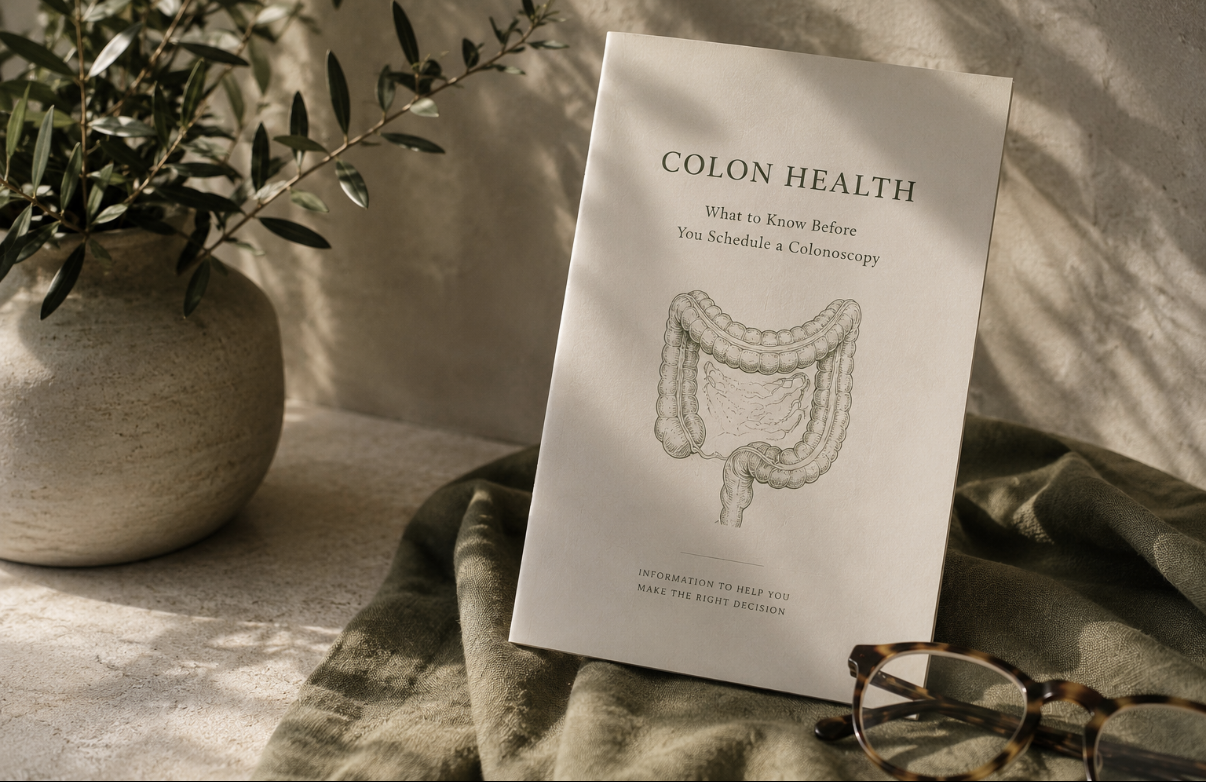
Colonoscopy has become a routine part of colorectal cancer screening. For many people, it is presented as the obvious next step once they reach a certain age. But routine does not mean risk-free.
A colonoscopy is an invasive procedure that requires significant bowel preparation and, in most cases, sedation. While it can be an important diagnostic tool, there are potential downsides that deserve to be part of the conversation before you schedule one.
The question isn't simply, “Should I get a colonoscopy?” It is also worth asking: What are the risks, are there other ways to screen, and what can I do to support the health of my colon in the first place?
The Bowel Prep Can Disrupt the Gut
One of the biggest concerns surrounding colonoscopy is actually what happens before the procedure.
The bowel must be thoroughly emptied, usually with large doses of laxatives and a bowel-cleansing solution. This produces significant diarrhea and essentially washes out the contents of the large intestine.
But the colon contains more than waste. It is home to an enormous community of bacteria that plays an important role in maintaining the intestinal environment.
The bowel preparation can disrupt this balance by removing both beneficial and undesirable bacteria. Research discussed by the Weston A. Price Foundation found that changes in the gut microbiota could persist following bowel cleansing and colonoscopy.
This is particularly worth considering if you already struggle with constipation, IBS, hemorrhoids, diverticulosis, or other digestive problems. These conditions may worsen following the procedure.
Colonoscopy Is Not Risk-Free
A colonoscopy involves inserting a flexible scope through the rectum and into the colon. Although it is performed routinely, complications do occur.
Potential complications include:
Colon perforation
Bleeding
Infection
Ulceration
Worsening bowel symptoms
Complications related to anesthesia
A perforation can be particularly serious because it can lead to infection within the abdominal cavity and may require hospitalization or surgery. The Weston A. Price Foundation article also discusses colonoscopy-related perforation as a potentially life-threatening complication.
Then There Is the Sedation
Most people undergoing colonoscopy are sedated, and deep sedation has become increasingly common.
The concern is that sedation adds another potential source of complications to an already invasive procedure. The information discussed in these sources includes cardiovascular effects, changes in blood pressure and heart rate, respiratory complications, and increased risks associated with anesthesia.
For someone who does ultimately need a colonoscopy, it is worth asking whether sedation is necessary and what options are available.
What Happens to the Gut Afterward?
The gut microbiome is one of the areas that deserves more attention.
The combination of powerful laxatives, bowel irrigation, fasting, and the procedure itself places significant stress on the digestive system. Also notes that changes in intestinal microbiota following bowel lavage and colonoscopy, including a decrease in protective bacterial populations.
This raises an important question: If we are concerned about colon health, should we also be concerned about what the procedure itself does to the intestinal environment?
For those who do undergo a colonoscopy, supporting the gut afterward is an important consideration.
A Colonoscopy Can Also Miss Things
Another concern is the assumption that a colonoscopy provides a perfect picture of the colon.
It doesn't.
The sources cited here report that doctors can miss a percentage of polyps, including some larger tumors. Estimates of 15–27% of polyps are missed, including approximately 6% of large tumors.
So while colonoscopy can detect abnormalities, it is not infallible.
That matters because it can create a sense of security that everything is fine simply because the procedure was completed.
Are There Other Options?
At-home stool-based colorectal screening tests are one option to consider. These tests use a stool sample to look for blood and other abnormalities and can be performed without the invasive procedure or bowel preparation required for a colonoscopy.
Stool-based testing and sigmoidoscopy as other approaches to colorectal screening, as there is not one screening method that is universally ideal for everyone.
What if I decide to go through with one?
This conversation is not necessarily about saying that nobody should ever have a colonoscopy under any circumstances. It is about the importance of understanding the procedure and asking questions.
You can ask about:
Are there noninvasive screening options?
What type of sedation will be used?
What are the potential risks of the bowel preparation?
How will I support my gut afterward?
Being informed doesn't mean being afraid. It means understanding what you're agreeing to.
Don't Forget the Health of the Colon Itself
Screening is only one part of the conversation.
The health of the colon is connected to the health of the digestive system as a whole. Nutrition, digestion, bowel regularity, and the health of the gut environment all deserve attention—not just when a screening appointment appears on the calendar.
Instead of waiting until there is a problem, we can begin paying attention to the signals the body gives us every day.
At Rophe Homeopathy, we take the time to look at those patterns as part of the whole case rather than focusing on one isolated symptom. A homeopathic consultation gives us the opportunity to understand your individual physical symptoms, patterns, history, and overall response so that your care is personalized to you.
Your colon health is worth paying attention to long before a screening appointment is scheduled.
Further Reading:
https://www.westonaprice.org/health-topics/routinely-risky-the-shadow-side-of-colonoscopy/
https://www.gutsense.org/colonoscopy/side-effects-of-colonoscopy.html